


Blog
6 Overseas Wholesale Blinds Markets That Can Add 38% Margin—If You Avoid the $85K CE Compliance Trap

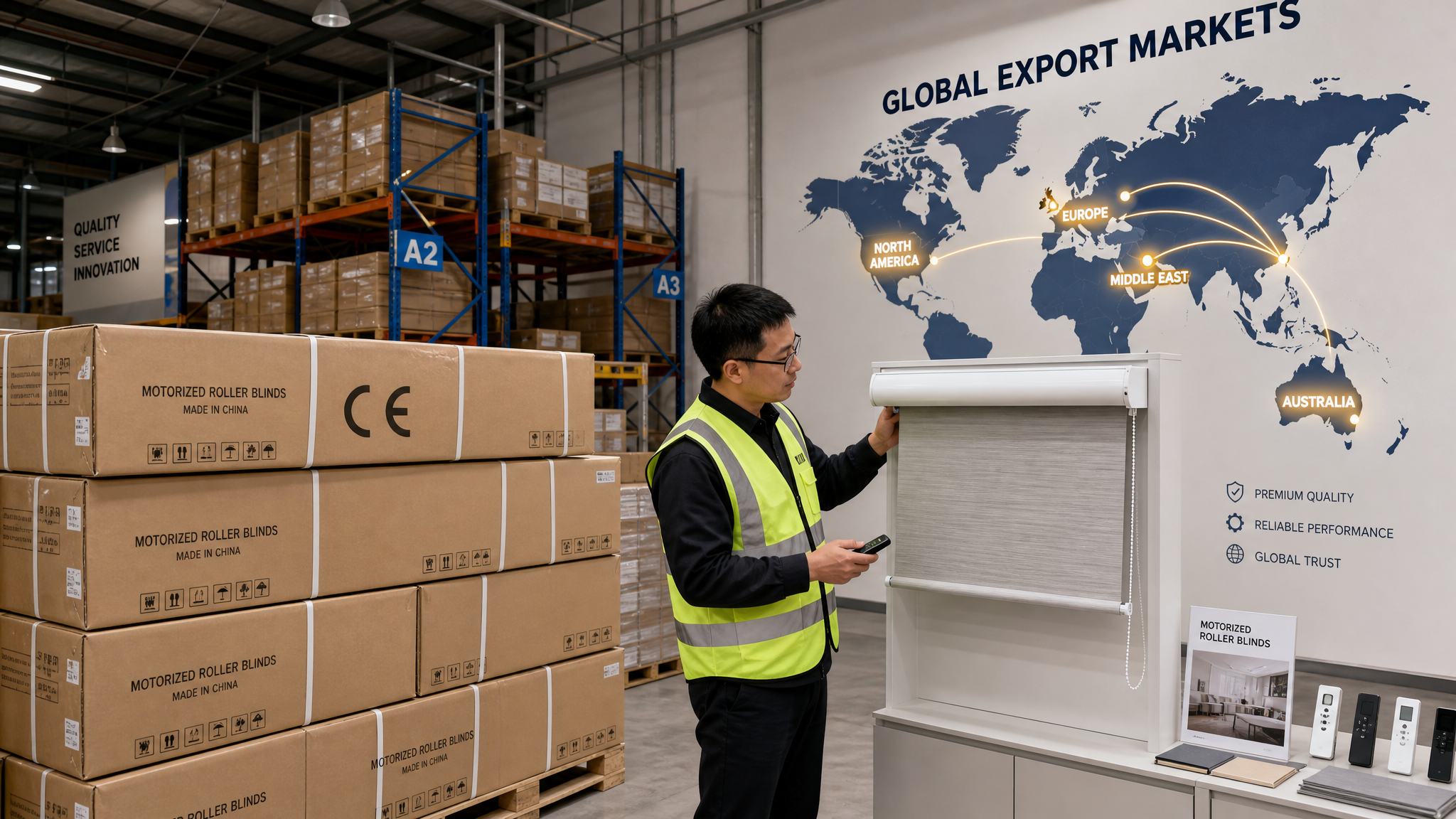
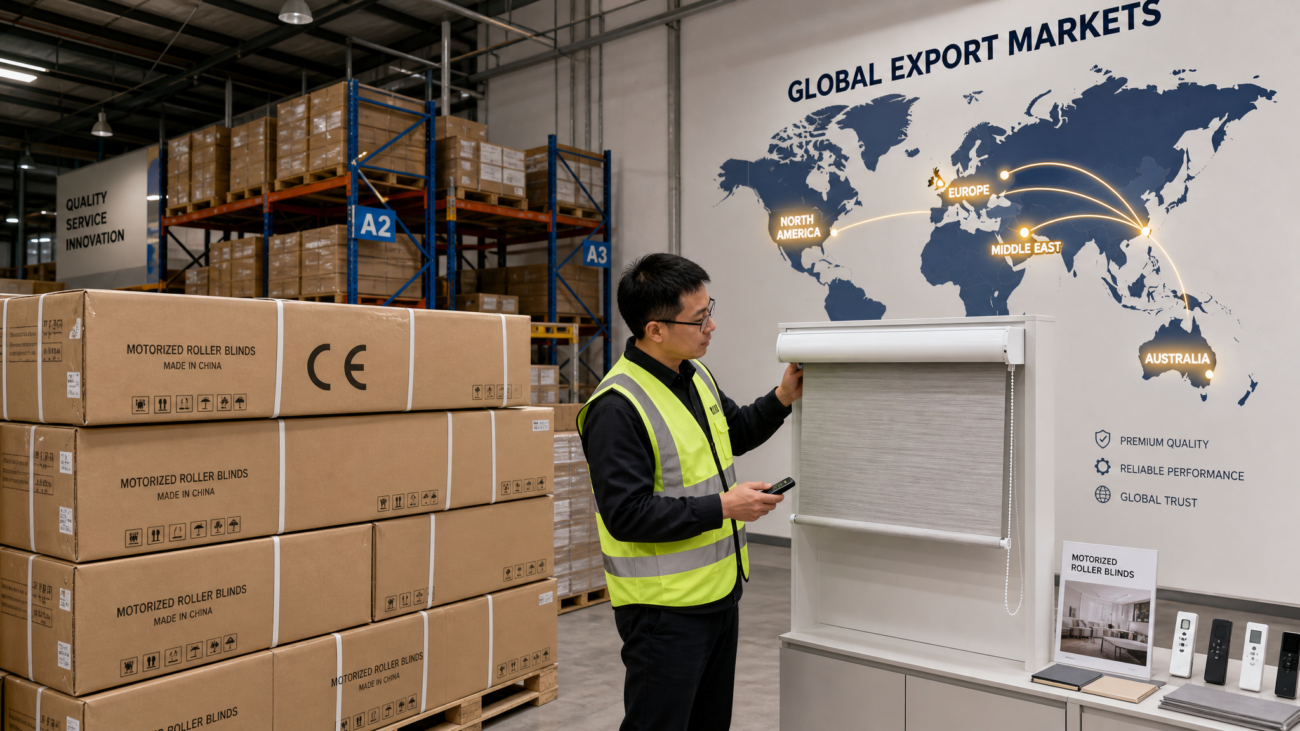
Global demand for **overseas wholesale blinds** is accelerating faster than most retailers realize.
Buyers who source directly from export factories can capture **38%+ gross margins**, while domestic middlemen quietly erase **18–25 margin points**.
Yet one CE certification delay at a European port can trigger **$85,000 in chargebacks, demurrage, and missed-season markdowns**—a risk importers often discover only after the container is held.
That gap between opportunity and hidden risk defines the current global market for **overseas wholesale blinds**.
This analysis breaks down where demand is strongest, which certifications matter, what products sell, who buys, and how factory-direct supply chains outperform broker-led sourcing.
For importers and B2B buyers, **overseas wholesale blinds** represent a structural sourcing shift, not a short-term discount play.
## Regional Certification Standards: CE, UKCA, and the $85K Compliance Trap
For **overseas wholesale blinds** entering the EU, **CE marking** under **EN 13120** is the baseline requirement.
Importers must also document **REACH** compliance for fabric coatings, lead-free weights, and flame-retardant additives.
A missing **Declaration of Performance (DoP)** remains one of the top causes of customs rejection at Rotterdam and Hamburg.
Industry audits show that nearly **1 in 5** first-time **overseas wholesale blinds** shipments to the EU is held for missing or outdated CE documentation.
### Europe: CE Marking and EN 13120
EU buyers increasingly require **CE marking**, a signed **DoP**, and **REACH** test reports for every SKU.
Reliable manufacturers typically provide these documents in a single compliance pack before samples ship.
To avoid costly chargebacks, importers should match the product code on the test report to the final invoice and carton label.
A mismatch can invalidate the CE claim and trigger re-testing fees of **$3,000–$8,000 per SKU**.
### North America: ANSI/WCMA and CPSC Cord Safety
The U.S. and Canada enforce **ANSI/WCMA A100.1** for window covering safety, plus strict **CPSC** cordless and cord-shroud rules.
Retailers face chargebacks when **overseas wholesale blinds** arrive with non-compliant cords or missing warning labels.
Reliable manufacturers typically pre-install cordless mechanisms and provide **Children’s Product Certificate (CPC)** support for customs clearance.
### Australia/New Zealand: AS/NZS 4284 and Supplier Documentation
Australia requires **AS/NZS 4284** testing for internal blinds and stringent cord safety documentation.
New Zealand importers increasingly ask for **SDoC (Supplier Declaration of Conformity)** alongside test reports.
### Middle East and Gulf Markets: GCC Conformity and Fire Codes
Saudi Arabia, UAE, and Qatar often request **GCC conformity certificates** and fire-rated fabric evidence for hospitality and commercial projects.
Skipping this step can freeze payment on high-value hotel tenders.
## Hot-Selling Overseas Wholesale Blinds Product Types by Region
### Blackout and Zebra Blinds
Blackout roller and zebra blinds dominate **European and East Asian** orders.
Buyers want **100% blackout coatings**, noise-reducing fabric, and child-safe chain mechanisms.
For **overseas wholesale blinds** suppliers, blackout zebra fabric is one of the highest-repeat SKUs because it combines privacy and light control in a single product.
### Motorized and Smart Blinds
Motorized **overseas wholesale blinds** are the fastest-growing category, with **22% annual growth** in North America and Western Europe.
Smart-home compatibility—Zigbee, Z-Wave, Matter, and RF remote—now drives B2B purchase decisions more than price alone.
For **overseas wholesale blinds** exporters, motorized lines also create recurring revenue through replacement remotes, chargers, and smart bridges.
### Cordless Cellular and Honeycomb Shades
Cordless cellular shades lead U.S. replacement and new-build orders.
Their energy-saving honeycomb structure commands **15–25% higher retail margins** than standard roller blinds.
Many retailers use **overseas wholesale blinds** programs to private-label cordless cellular lines, especially for nursery and child-safe positioning.
### Solar and Outdoor Shades
In Australia, the Middle East, and Southeast Asia, solar-reflective outdoor blinds are high-demand items.
Export factories report **30%+ repeat order rates** from contractors serving coastal and desert climates.
## Target Buyer Profiles for Overseas Wholesale Blinds Markets
### Independent Blind Retailers
Independent retailers need small-batch mixing, custom sizes, and fast restocking.
They typically order **20–200 units per SKU** and rely on factory private-label options.
For these buyers, **overseas wholesale blinds** must be cut-to-size ready, with no visible stitching flaws or inconsistent dye lots.
### E-Commerce and DTC Brands
Amazon and Shopify sellers prioritize **MOQ flexibility**, branded packaging, and FBA-ready barcodes.
They often start with **50–100 units per colorway** to test demand before scaling.
These sellers often use **overseas wholesale blinds** programs to test three colorways without tying up $50K in inventory.
### Interior Design Studios and Contractors
Design studios buy **motorized, blackout, and acoustic blinds** for residential and office projects.
They value spec sheets, fabric sample kits, and quick technical support over rock-bottom pricing.
Studios source **overseas wholesale blinds** when projects require non-standard window sizes and custom fabric lines.
### Hotels and Property Developers
Hospitality buyers source **fire-rated, blackout, and smart-control blinds** in bulk.
They demand compliance documentation, installation support, and long payment terms.
Large property groups negotiate annual **overseas wholesale blinds** contracts to lock pricing and secure priority production slots.
## Factory Export Advantages: Why Direct Sourcing Beats Domestic Middlemen
### MOQ Flexibility and Private-Label OEM
Export factories typically accept **50–100 units per SKU** for trial orders, while domestic wholesalers often force **500+ unit minimums** on imported stock.
Private-label OEM allows retailers to build brand equity instead of selling interchangeable products.
### Compliance Documentation and Third-Party Inspection
Reliable **overseas wholesale blinds** factories provide **CE, UKCA, ANSI/WCMA, and AS/NZS** test reports before shipping.
They also welcome **SGS, TÜV, or QIMA** pre-shipment inspections to reduce chargeback risk.
### Consolidated Shipping and Landed Cost Control
Direct factory pricing lowers unit cost by **15–30%** versus trading-company quotes.
Consolidating mixed **overseas wholesale blinds** SKUs into one container cuts per-unit freight by **8–12%**.
### Warranty and After-Sales Support
Top factories offer **2–5 year warranties** on motors and fabrics.
They keep replacement components in regional warehouses to prevent warranty claims from becoming negative reviews.
## How to Audit an Overseas Wholesale Blinds Supplier in 2025
### Request the Full Compliance Pack Before Sampling
Ask for **EN 13120, REACH, ANSI/WCMA, and AS/NZS** certificates with matching product codes.
Cross-check the factory name on the test report with the invoice.
### Verify Factory Capability, Not Just Price
Use a **live video walkthrough** to confirm coating lines, motor assembly, and QC stations.
Request **3 recent export references** in your target region.
### Lock Down Incoterms and Payment Terms
Use **FOB or CIF** terms with clear inspection rights.
Prefer **30% deposit / 70% against B/L** to protect cash flow.
### Pilot Before You Scale
Run a **50–100 unit trial order** of **overseas wholesale blinds** with a third-party inspection.
Measure defect rate, packaging integrity, and documentation accuracy before placing a full container.
## Conclusion: 3 Takeaways for High-Demand Overseas Wholesale Blinds Markets
1. **Compliance is the real gatekeeper.** CE, UKCA, ANSI/WCMA, and AS/NZS documentation decides whether your **overseas wholesale blinds** clear customs or trigger $85K in chargebacks.
2. **Motorized and cordless products drive margin.** Smart blinds and energy-efficient cellular shades deliver **15–38% higher retail margins** than commodity roller blinds.
3. **Factory-direct sourcing compounds advantage.** MOQ flexibility, private-label OEM, and pre-shipment inspection reduce cost by **15–30%** while protecting quality.
Use this checklist to audit your current supplier: request full compliance packs, verify factory capability by video, lock down Incoterms, and run a small pilot order before scaling.
—
## 📚 Related Resources
CE Certification Guide for Window Covering Importers — /blog/ce-certification-window-coverings
Motorized Blinds Wholesale Buyer’s Guide — /blog/motorized-blinds-wholesale-buyers-guide
Factory Direct Blinds Supplier Audit Checklist — /blog/factory-direct-blinds-supplier-audit-checklist
Cordless Cellular Shades: ANSI/WCMA Compliance — /blog/cordless-cellular-shades-ansi-wcma-compliance
—
## ❓ Frequently Asked Questions
**Q:** What certifications do overseas wholesale blinds need for Europe?
**A:** EU imports typically need CE marking under EN 13120, a signed Declaration of Performance, and REACH chemical compliance documentation for fabrics and components.
**Q:** Which overseas wholesale blinds product type has the highest margin?
**A:** Motorized smart blinds and cordless cellular shades usually deliver 15–38% higher retail margins than standard roller blinds because of energy savings and smart-home features.
**Q:** What is the typical MOQ for factory-direct wholesale blinds?
**A:** Many export factories accept 50–100 units per SKU for trial orders, while domestic wholesalers often require 500+ units per SKU.
**Q:** How can importers avoid CE certification delays and chargebacks?
**A:** Request a full compliance pack before sampling, match product codes on test reports to invoices, and use third-party pre-shipment inspection such as SGS, TÜV, or QIMA.
**Q:** Who are the main buyers of overseas wholesale blinds?
**A:** Independent blind retailers, e-commerce DTC brands, interior design studios, contractors, hotels, and property developers are the primary B2B buyers.