
Blog
Blinds Buying Mistakes That Cost You $1,200+ (Home & Commercial Guide)

Most buyers overspend on blinds by **25–40%** because they choose style before function. Industry audits show that the wrong light control, privacy level, or mounting method triggers reorders, custom-cut waste, and early replacement. This guide breaks down how to choose blinds for home and commercial use without paying twice.
## 1. Match the Blinds Type to the Room Function
Different blinds solve different problems. A bedroom needs **blackout blinds**, a kitchen needs moisture-resistant blinds, and an office conference room needs glare control.
### Home Blinds by Room
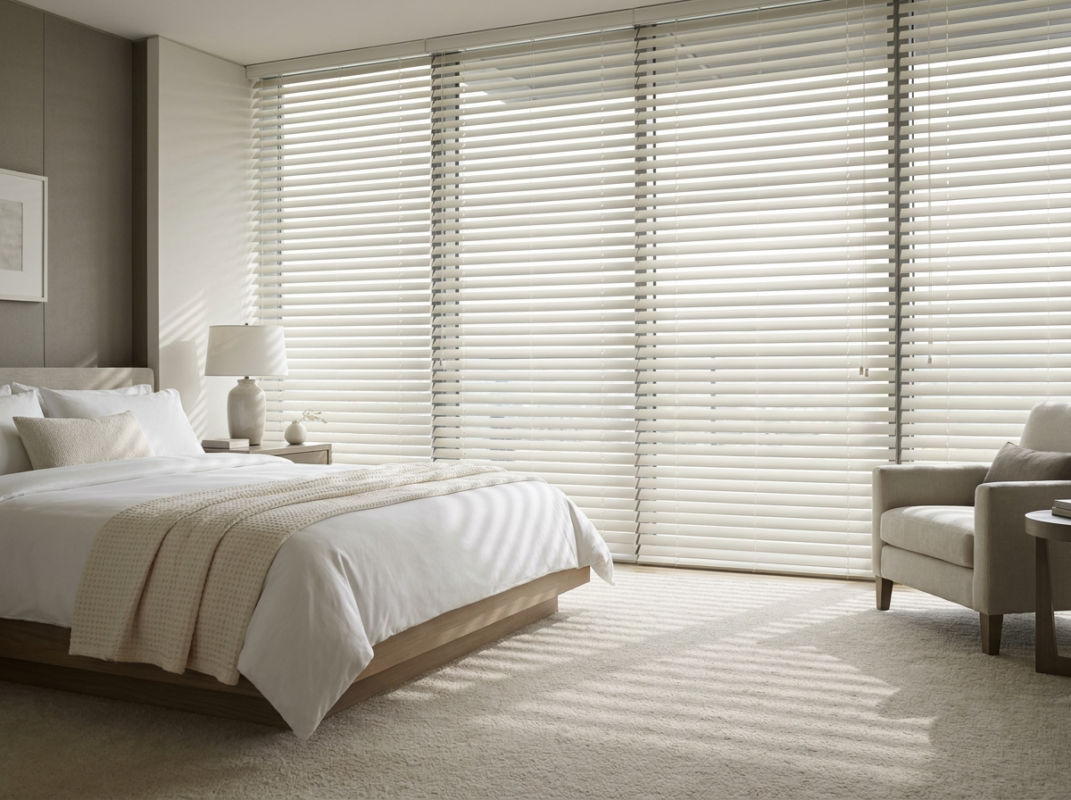
– **Bedroom:** Blackout roller blinds or blackout cellular blinds with side channels.
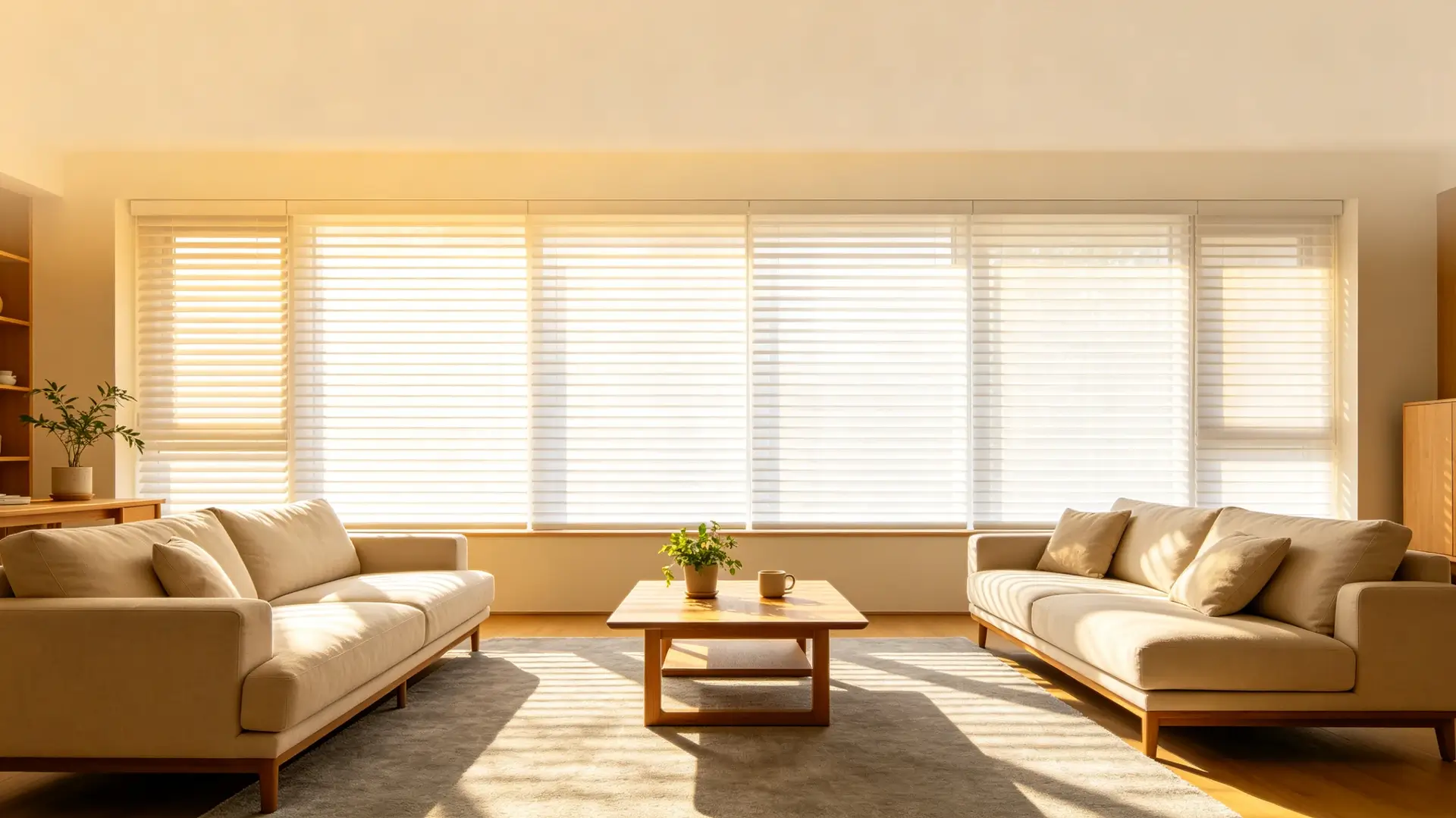
– **Living room:** Zebra blinds or light-filtering roller blinds for balanced daylight.
– **Kitchen / bathroom:** Aluminum Venetian blinds or PVC faux wood blinds because they resist humidity.
– **Home office:** Solar screen blinds with **5–10% openness factor** to cut screen glare.
### Commercial Blinds by Zone
– **Office workstations:** Solar roller blinds or vertical blinds for adjustable glare and HVAC savings.
– **Meeting rooms:** Double roller blinds with a blackout layer and a privacy layer.
– **Restaurants / retail:** Zebra blinds or aluminum blinds for brand visibility plus shade control.
– **Hotels:** Blackout roller blinds with cassette valances for sleep quality and a clean look.
Reliable manufacturers typically recommend matching the blinds to the room function before comparing price. That one step prevents most costly chargebacks.
## 2. Read These 4 Light Control and Privacy Specs First
Light control is not the same as privacy. Industry audits show that **3 in 10 returns** happen because buyers ignored openness factor or opacity.
### Openness Factor
Openness factor is the percentage of light and visibility that passes through the fabric.
– **1–3%:** Best for privacy and UV protection; still lets soft light through.
– **5–10%:** Best for views and daylight while reducing screen glare.
– **14%+:** Only for decorative use; weak privacy.
### Blackout vs Room Darkening
**Blackout blinds** block **99–100%** of light and are best for bedrooms and media rooms. **Room darkening blinds** block **85–95%** but may glow around edges. To avoid costly chargebacks, confirm whether the supplier rates the fabric or the full window assembly.
### Privacy Direction
– Day privacy: choose light-colored, semi-transparent blinds that let you see out but limit outside-in views.
– Night privacy: add a blackout liner or switch to dual-layer zebra blinds.
– Street-facing commercial windows: choose top-down/bottom-up blinds for signage visibility plus seated privacy.
## 3. Avoid Installation and Measurement Mistakes That Trigger 30% Returns
Measurement errors remain the **#1 cause of custom blinds returns**. Reliable manufacturers typically report **25–30% of remakes** come from wrong inside-mount depth or mismatched width.
### Inside Mount vs Outside Mount
– **Inside mount:** Sleeker, but requires a minimum frame depth — usually **2–2.5 inches** for roller blinds and **1.5 inches** for aluminum blinds.
– **Outside mount:** Covers more light gap, hides uneven windows, and works for shallow frames.
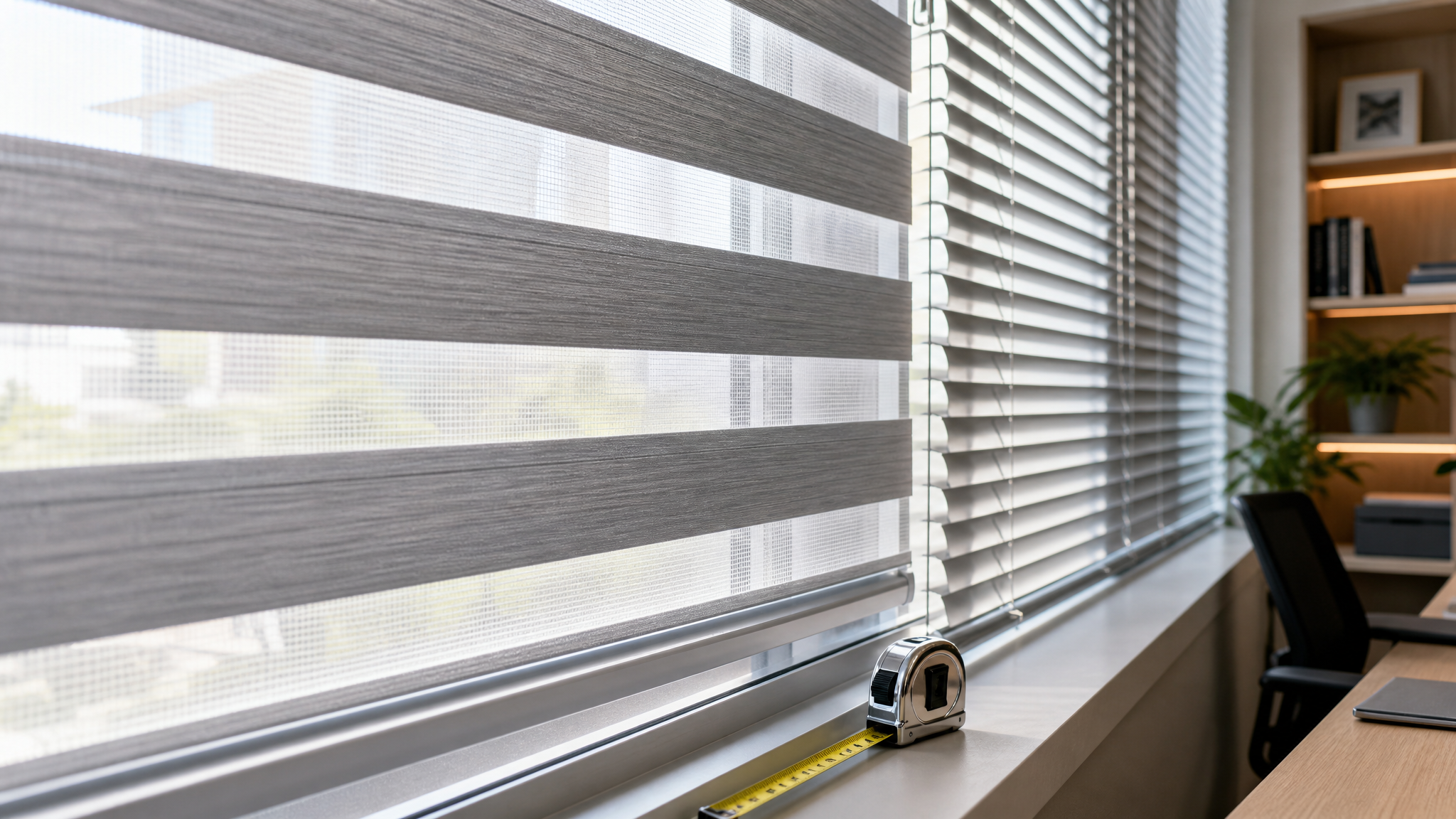
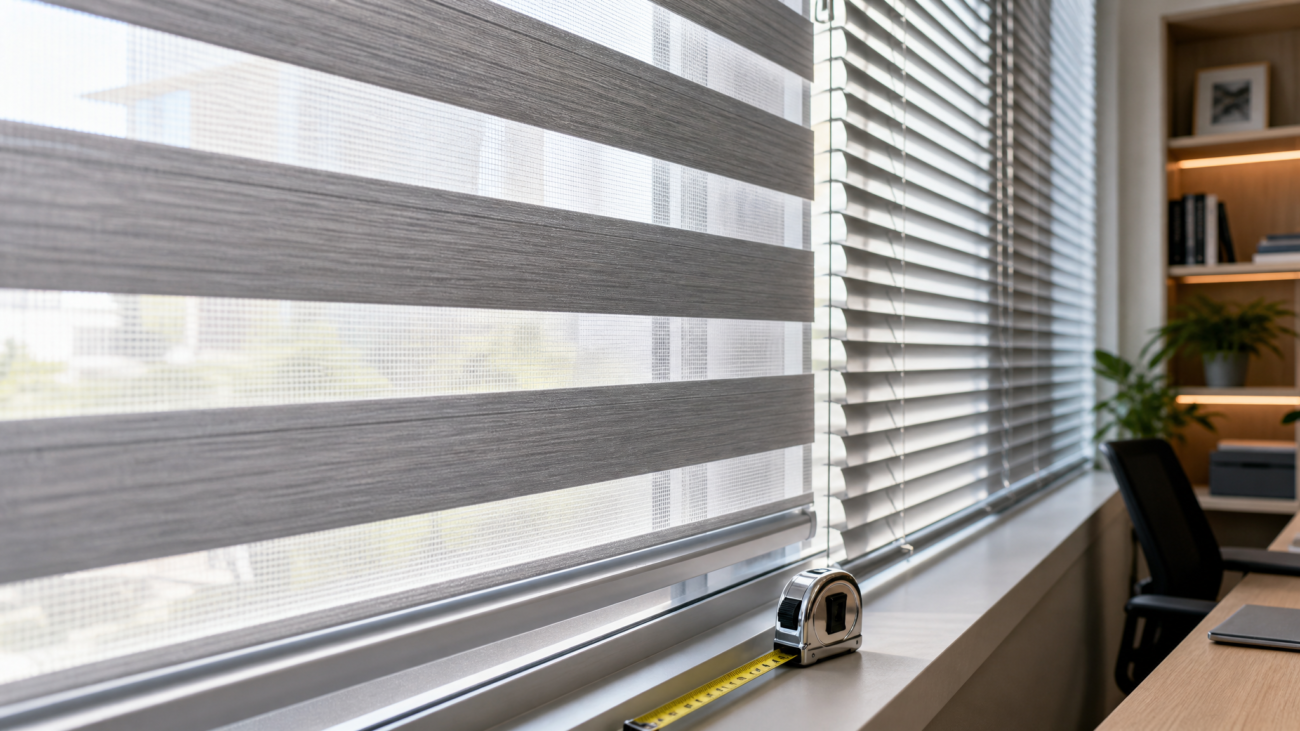
– Measure width at top, middle, and bottom. Use the **narrowest width** for inside mount and the **widest width** for outside mount.
### Commercial Installation Compliance
For offices, schools, and healthcare facilities, check local fire codes and child safety standards. Specify cordless or motorized blinds in high-traffic zones. Always confirm mounting surface type: drywall anchors, concrete fasteners, and ceiling brackets change labor cost by **15–30%**.
## 4. Choose Materials by Durability and Maintenance
The right blinds material extends service life and reduces maintenance labor. Commercial facilities often replace cheap PVC blinds every **2–3 years**, while quality aluminum or faux wood blinds last **7–10 years**.
### Material Comparison
– **Aluminum Venetian blinds:** Lightweight, moisture-resistant, best for kitchens and high-humidity commercial spaces.
– **Faux wood blinds:** Durable, warp-resistant, and paintable; ideal for bathrooms and rental units.
– **Fabric roller blinds:** Soft look and strong blackout options, but need dusting and stain-resistant coating in food-service areas.
– **Zebra / sheer blinds:** Great for modern interiors, but fragile edges require careful handling.
To avoid costly chargebacks, ask for a **minimum 3-year warranty** on mechanisms and a **5-year warranty** on aluminum or faux wood slats. Reliable manufacturers typically include this without a surcharge.
## 5. Calculate Total Cost of Ownership, Not Just Price per Blind
Cheap blinds often cost more over time. A **$30 PVC blind** replaced twice in five years can exceed a **$90 aluminum blind** installed once.
### Budget Benchmarks
– **Basic home blinds:** **$25–$60** per window.
– **Custom blackout or zebra blinds:** **$80–$150** per window.
– **Commercial contract blinds installed:** **$120–$300+** per window depending on motorization and fire rating.
– Motorized blinds add **$100–$250** per unit but cut daily labor and improve energy control.
Industry audits show that energy-efficient blinds can reduce solar heat gain by **up to 45%**, lowering cooling costs in sun-facing commercial spaces. Factor energy savings into your payback calculation before choosing the lowest quote.
## 6. Prioritize Smart and Motorized Blinds for High-Value Commercial Fit-Outs
Manual blinds work for small homes, but commercial buildings benefit from automation. Smart blinds integrate with building management systems and reduce HVAC load.
### Where Motorized Blinds Pay Off
– Atrium and skylight windows with hard-to-reach controls.
– Meeting rooms requiring one-touch blackout.
– Retail stores needing scheduled daylighting.
– Healthcare rooms with hygiene and accessibility requirements.
### Key Specs to Check
– **Control protocol:** Z-Wave, Zigbee, Wi-Fi, or wired KNX for commercial systems.
– **Decibel rating:** Under **44 dB** for offices and meeting rooms.
– **Battery vs hardwired:** Hardwired suits new construction; battery suits retrofit.
– **Grouping:** Confirm the hub can control **20+ blinds** per zone without lag.
## 7. Use This 3-Point Blinds Selection Checklist
Before you order, audit every window with this sequence: room function → light control specs → mounting method.
### Final Checklist
1. Define the room use and required privacy level.
2. Match openness factor and blackout rating to that use.
3. Confirm inside-mount depth and measure all three width points.
4. Select material for humidity, UV, and cleaning needs.
5. Compare total cost of ownership, not just unit price.
### Key Takeaways
– The right blinds type prevents **25–40% overspend** from rework and early replacement.
– Blackout and privacy are separate specs: confirm both before ordering.
– Professional measurement and material selection are worth more than any small upfront discount.
**CTA:** Use this checklist to audit your current blinds selection before you request quotes. If you manage a commercial fit-out, send the room-by-room table to two or three suppliers and ask for a written warranty on mechanisms and fabric.
—
## 📚 Related Resources
– Read our blackout blinds comparison: /blackout-blinds-comparison
– Window measurement checklist: /how-to-measure-windows-for-blinds
– Commercial window treatment guide: /commercial-window-treatments-guide
– Smart blinds automation guide: /smart-blinds-automation
—
## ❓ Frequently Asked Questions
**Q: What type of blinds is best for a bedroom?**
**A:** Blackout roller blinds or blackout cellular blinds with side channels are best because they block 99–100% of light and reduce edge glow.
**Q: Are vertical blinds outdated for offices?**
**A:** No. Vertical blinds still work well for wide windows and patio doors because they control glare and foot traffic views without sagging like wide horizontal blinds.
**Q: Can I install blinds myself?**
**A:** Yes for standard inside-mount windows. Measure width at top, middle, and bottom with a steel tape, and use the narrowest width for inside mount. For commercial or motorized blinds, hire a certified installer to protect the warranty.
**Q: What is openness factor in blinds?**
**A:** Openness factor is the percentage of light and visibility that passes through the fabric. Choose 1–3% for privacy and UV protection, and 5–10% for views with reduced screen glare.
**Q: How much should good blinds cost per window?**
**A:** Basic home blinds run $25–$60 per window. Custom blackout or zebra blinds usually cost $80–$150, while installed commercial contract blinds range from $120–$300+ depending on motorization and fire rating.